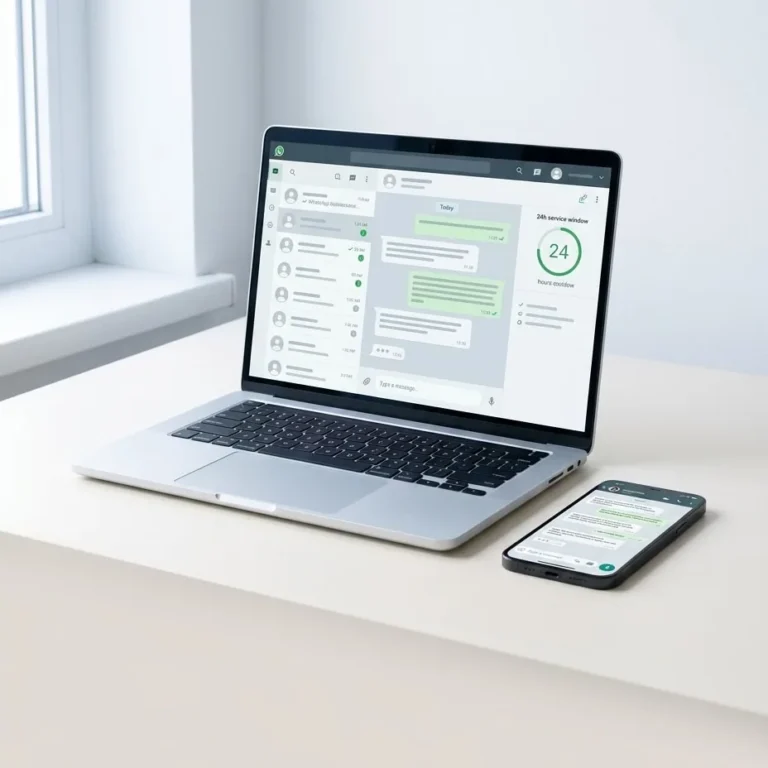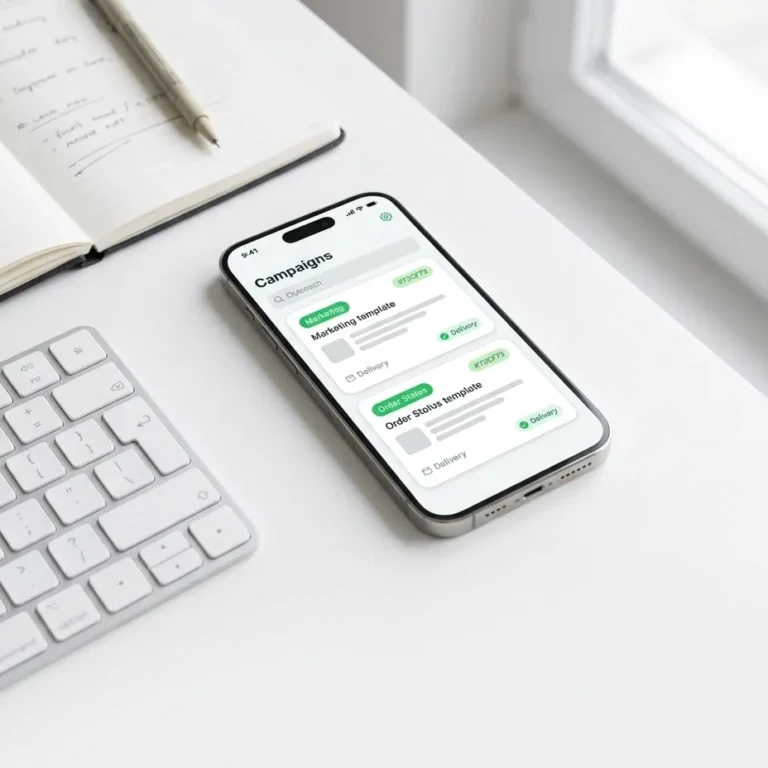
WhatsApp purchase attribution operates by cross-referencing messaging interaction data and unique message identifiers with real-time conversion events in your e-commerce platform. The system binds the message identifier dispatched via the API to the verified customer record and subsequent order, completely bypassing third-party cookies and statistical probability models. When integrated with WAGate, every completed order is deterministically credited to the exact campaign, message template, or support conversation that generated it.
Direct purchase attribution is defined as a deterministic server-side mechanism that pairs an outbound message identifier from the Meta Cloud API with a confirmed transaction record in an e-commerce platform based on a standardized user key, dynamic routing parameters, and a predefined conversion window.
Attribution Architecture: How WAGate Links Messages to Orders
Traditional analytics platforms rely on client-side browser cookies and UTM query parameters. This tracking chain breaks down when a customer starts an interaction inside a mobile application like WhatsApp and completes the checkout in an external browser, across another device, or via assisted sales. The WAGate analytics engine resolves this cross-environment breakdown using Server-Side Attribution.
The attribution workflow executes across four deterministic stages:
- Message Dispatch and Unique ID Logging: During campaign execution, WAGate captures the unique message identifier (
wamid) assigned by Meta upon dispatch. Simultaneously, all dynamic destination URLs embed tracking parameters containing conversation and recipient identifiers. - Phone Number Normalization: Recipient phone numbers are sanitized and parsed into the standard E.164 international format (such as
+14155552671). This standardized string serves as the immutable primary key within the data store. - Event Ingestion via Webhooks: The e-commerce backend dispatches a real-time webhook payload to WAGate immediately upon reaching a verified payment state (
payment_completeororder_created). For a complete breakdown of payload structures, consult the official Meta Cloud API Webhooks documentation. - Deterministic Matching Engine: The engine checks for inbound or outbound interactions associated with that normalized phone number within the active attribution window. When an interaction matches, order metadata—including gross value, currency, line items, and transaction IDs—is credited directly to the responsible campaign.
| Processing Stage | Data Source | Identifier Format | WAGate Engine Action |
|---|---|---|---|
| Message Dispatch | Meta Cloud API | wamid.HBg... | Stores conversation ID and timestamp |
| Link Click | Customer Browser | session_token / cid | Opens click-based attribution session |
| Order Placement | Store Backend | E.164 + Order ID | Ingests webhook with revenue payload |
| Attribution Resolution | WAGate Engine | Database Key Match | Credits revenue to campaign and template |
Implementing Order Attribution for WhatsApp Campaigns in E-Commerce
Precise conversion tracking requires the e-commerce store to transmit comprehensive order payloads as soon as payment processing clears. This pipeline leverages native platform webhooks and REST endpoints without requiring manual tracking scripts.
WordPress deployments use the WhatsApp for WooCommerce integration to stream checkout events from the checkout pipeline directly to the customer ledger. The module synchronizes transaction values, unique order numbers, and phone records. For merchants operating on Shopify, the system captures orders/paid event payloads using the Shopify Admin API webhooks documentation via the dedicated WhatsApp for Shopify integration for real-time validation.
To ensure maximum data fidelity during setup, enforce the following technical requirements:
- Mandatory Checkout Phone Fields: Configure the checkout form to require a valid phone number with automated international dialing code detection.
- Strict Payment Status Filters: Only trigger attribution webhooks on verified order states (
Processing,Completed, orPaid) to exclude abandoned checkouts and failed authorization attempts. - Dynamic Campaign Link Generation: When running WhatsApp marketing campaigns, use system-generated shortened URLs that embed the specific broadcast identifier into the redirect destination.
Attribution Windows and Analytical Models
An attribution window defines the maximum allowable timeframe between message delivery and final order placement for the transaction to be credited to that communication. The selected window directly controls calculated ROAS (Return on Ad Spend) and multi-channel revenue distribution.
Messaging-driven e-commerce standardizes across three distinct attribution windows:
- 24-Hour Window (Strict Direct): Designed for flash sales, price-drop alerts, and abandoned cart automations where transaction intent is immediate and directly driven by the prompt.
- 72-Hour Window (Standard E-Commerce): The default standard for broad marketing broadcasts, seasonal drops, and product announcements, accommodating weekend deliberation cycles.
- 7-Day Window (High-Ticket): Applied to consultative sales, custom orders, or high-average-order-value items that require human agent intervention or multi-day consideration.
WAGate calculates reporting under a Last-Touch Attribution model by default. If a shopper receives an automated product announcement on Monday and a checkout reminder on Wednesday prior to purchasing, total revenue is allocated to Wednesday's message. Granular reporting endpoints that expose first-touch interactions across complex customer journeys are accessible through the WAGate developer documentation.
Interpreting Reporting Metrics in WAGate: IDs, Conversions, and ROAS
The WAGate analytical console aggregates conversational transaction records, breaking down store performance by campaign, message template, and support agent.
Message-Level Conversion and Revenue Analysis
Rather than stopping at delivery telemetry, the campaign performance view maps financial returns alongside technical delivery stats:
- Delivered Messages: The total count of outbound payloads receiving a confirmed
deliveredreceipt from Meta edge nodes. - Click-Through Rate (CTR): The proportion of unique recipients who interacted with interactive quick-reply buttons or dynamic inline links.
- Attributed Orders: The count of verified transactions completed by message recipients inside the active attribution window.
- Attributed Revenue: Net currency volume generated by attributed checkouts, adjusted for canceled orders and synchronized refunds.
- Revenue Per Recipient (RPR): Total attributed revenue divided by the audience dispatch volume, establishing an efficiency benchmark across customer segments.
- Return on Conversation Spend (ROAS): Net attributed revenue divided by the blended cost of Meta conversation charges and platform execution.
These granular financial metrics give e-commerce operators empirical benchmarks to deprecate underperforming templates and scale high-yield conversational workflows.
Edge Cases and Common Pitfalls in Purchase Attribution
Production deployments inevitably encounter real-world data discrepancies that challenge attribution accuracy. The WAGate ingestion engine handles these anomalies through targeted validation layers:
- Phone Number Formatting Discrepancies: Customers may receive messages on a fully qualified international number but check out using a local number with leading zeros (e.g., entering
052...instead of country codes). The normalization layer strips formatting artifacts, detects the region prefix, and parses both ends into valid E.164 strings before querying the database. - Cross-Channel Payment Disconnects: Shoppers may open a cart link via WhatsApp but switch to bank transfer, manual invoicing, or telephone checkout. Because matching resolves at the server level via customer identifiers rather than browser cookies, the purchase is accurately attributed once the order record is registered.
- Multiple Orders Within One Window: When a recipient completes several distinct orders within an open attribution window following a single broadcast, the engine credits only the initial transaction by default, preventing artificial revenue inflation unless recurring attribution is explicitly enabled.
Maintaining strict validation at checkout and monitoring webhook logs guarantees that conversational revenue remains fully verifiable across your analytics stack.
To audit your store's messaging architecture or integrate server-side tracking across your catalog, get in touch with our engineering team for an end-to-end technical evaluation.
Common questions
What happens when a customer receives two different WhatsApp messages before making a purchase?
WAGate evaluates multi-message interactions using a deterministic last-touch attribution model. The system credits the final message delivered to the recipient prior to the timestamp of the completed transaction, provided the order occurs within that specific message's active attribution window. Earlier broadcasts remain accessible in developer logs for journey analysis.
Is dedicated tracking code required on the website to enable direct WhatsApp purchase attribution?
No client-side JavaScript snippet, tracking container, or browser pixel is required to establish attribution. The entire mechanism operates server-side, with WAGate processing incoming order webhooks dispatched directly by your e-commerce platform and matching customer phone identifiers against outbound Meta Cloud API message records.
How does the system handle phone number format discrepancies between WhatsApp and checkout?
Every phone number entering the platform undergoes automated normalization into the international E.164 standard. The system strips leading zeros, white space, and regional punctuation, resolving differences between how phone numbers are formatted in WhatsApp accounts and how customers manually type them into online checkout forms.
Does the purchase attribution mechanism comply with privacy regulations and GDPR?
The server-side attribution pipeline adheres to GDPR and privacy standards by processing customer data exclusively for order verification without third-party tracking cookies or external ad networks. Data transfers between e-commerce webhooks and WAGate servers are encrypted, utilizing pseudonymized identifiers across analytical dashboards.
Try it on your own number.
WhatsApp, Messenger, Instagram and the AI chatbot — 7-day free trial, no credit card.